
Your top news on global issues
Provided by AGP
Photographer Xianyi Wang Presents Dual Realities, A Solo Exhibition on Identity and Perception
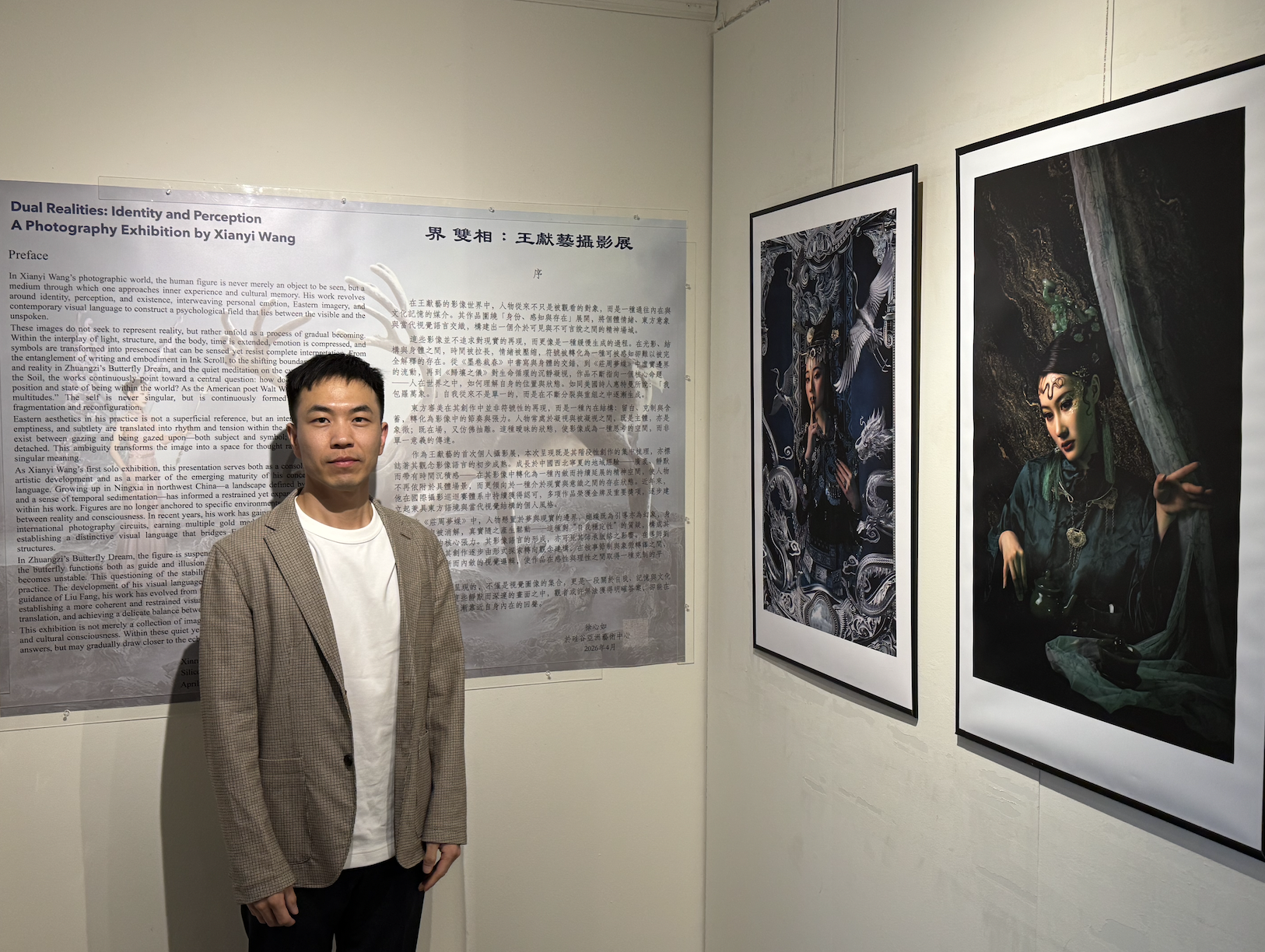
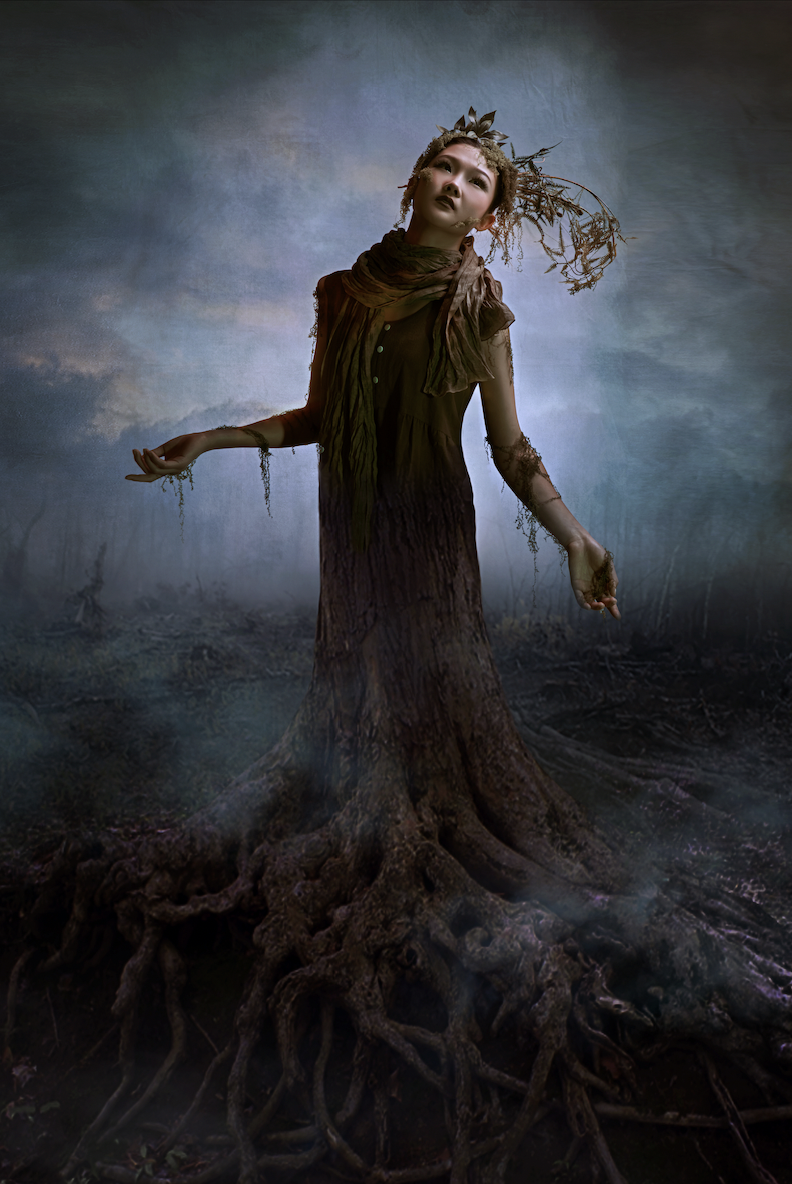
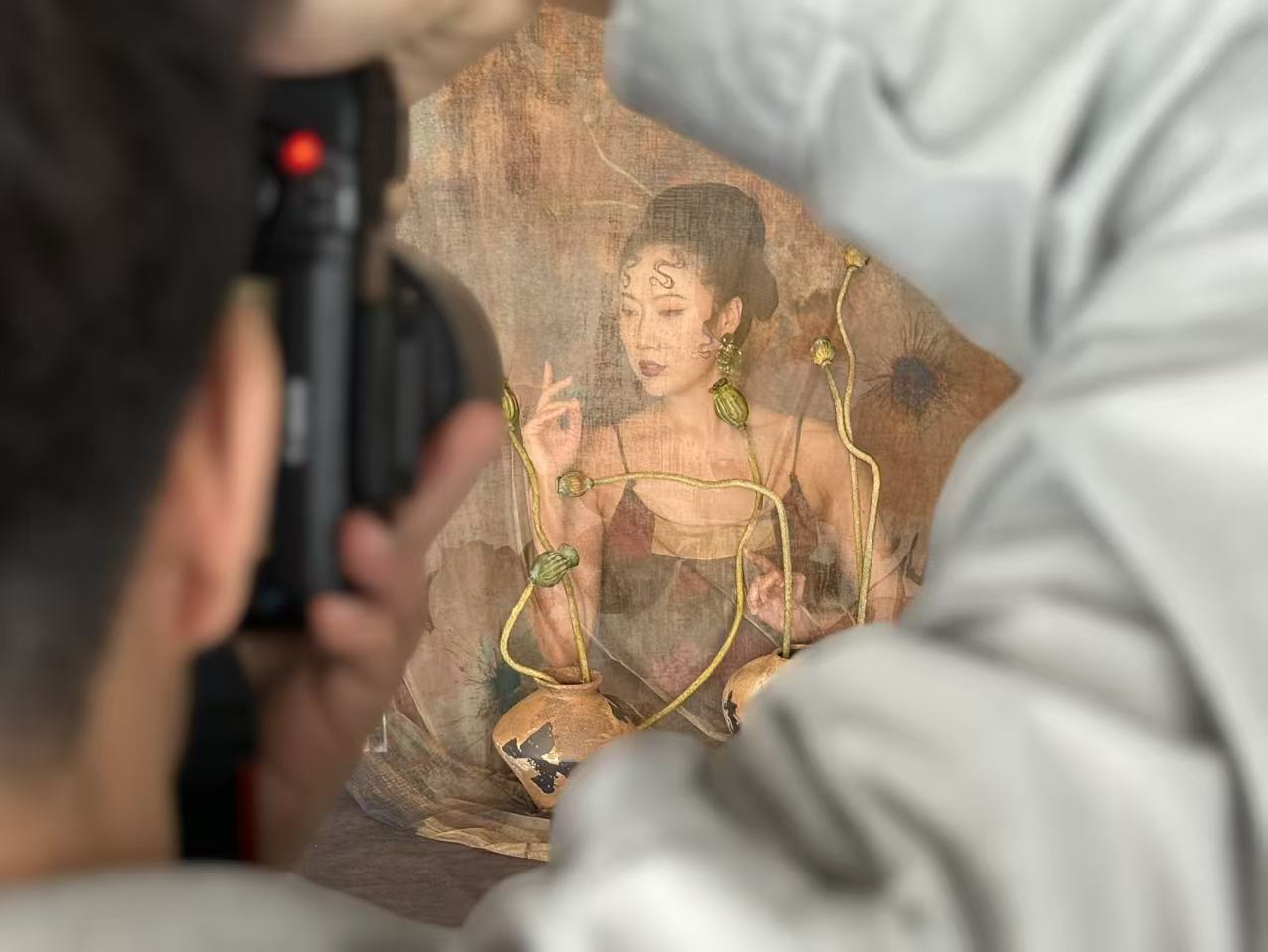
The exhibition marks Wang’s first solo exhibition and a significant step in the development of his visual language. Centered on the themes of identity, awareness, and existence, Dual Realities brings together portraiture, conceptual imagery, Eastern aesthetics, and contemporary visual language. Through restrained lighting, symbolic objects, staged compositions, and emotionally charged human figures, Wang creates a photographic world that exists between reality and dream, visibility and silence, selfhood and transformation.
Born in Ningxia, in northwest China, Wang first encountered photography as a teenager. At the time, he used a simple point-and-shoot camera and had to take film to a photo studio to be developed. What began as a simple desire to preserve moments gradually evolved into a deeper form of artistic expression. For Wang, photography eventually became more than a tool for recording the world. It became a way of understanding the self.
“I gradually realized that photography is not merely about documentation,” Wang said in a recent BARTV interview. “A camera is more like a tool, just as a paintbrush is to a painter. What matters is not the tool itself, but what you express through it.”
This understanding led Wang from documentary impulses toward portraiture and conceptual photography. In his work, the human figure is rarely presented as a conventional subject. Instead, the subject becomes a carrier of inner states, internal tension, and symbolic meaning. Wang does not simply photograph a person; he creates an atmosphere in which the subject becomes part of a broader psychological and visual world.
For Wang, portrait photography and conceptual imagery are not separate categories. The presence serves as an entry point for the viewer, while the conceptual structure shapes the psychological logic of the image. Before creating a photograph, he often begins not with a fixed story, but with a feeling, an atmosphere, or an internal state that he wants to explore. The person in the image then becomes a vessel for that condition.
The title Dual Realities reflects this artistic approach. Wang does not define “boundary” and “duality” in rigid terms. Instead, he sees them as open and shifting concepts. The “boundary” may exist between reality and consciousness, individual and culture, viewer and viewed, or memory and present experience. “Duality,” for him, is a way of seeing the world: many internal states and identities exist in tension with their opposites.
“Many things naturally contain two sides at the same time, such as repression and strength, fragility and hope,” Wang said. “Although my works may appear restrained, or even somewhat dark, what I pay closer attention to is the tension within them, rather than a single emotion.”
That tension is especially visible in Wang’s use of light and space. His upbringing in Ningxia continues to influence his visual sensibility. The vast and quiet landscape of northwest China gave him a heightened awareness of distance, rhythm, and silence. In his photographs, presence often appears still, inward-looking, and slightly detached from the world around them. The images do not rush toward explanation. They allow silence to accumulate.
Wang’s compositions often carry a sense of theatricality, but not in a decorative way. Costumes, props, symbolic objects, and lighting are carefully chosen to support the psychological structure of the image. Objects such as butterflies, old locks, textiles, silver ornaments, Buddha subject, lotus flowers, and ritual-like vessels appear throughout his practice. Yet Wang does not treat these objects as simple visual decoration. He sees them as part of the image’s language.
In works such as Ink Scroll, calligraphy, scrolls, paper, and the body are brought into the same visual field. The result is not a straightforward display of cultural identity, but a more subtle conversation between tradition and contemporary individual expression. Wang is careful not to turn Eastern imagery into surface-level symbolism. For him, cultural objects only matter when they connect meaningfully with the figure’s internal state.
“If I try too deliberately to highlight them, the work may become somewhat superficial,” Wang said. “What I care about more is whether these elements have a relationship with the subject’s state and emotions.”
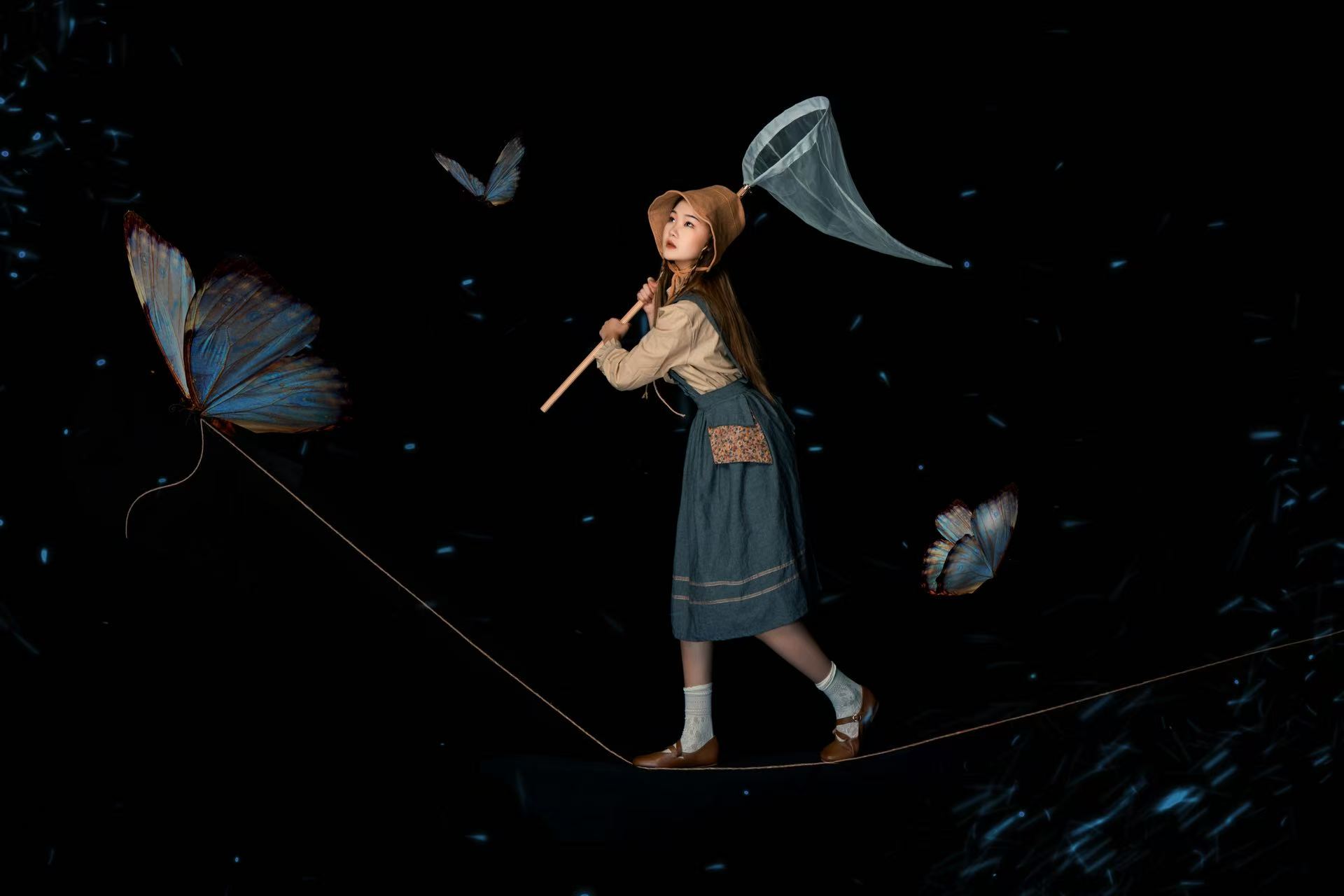
One of Wang’s most recognized works, Zhuangzi’s Butterfly Dream, draws from the classical Chinese philosophical story of Zhuang Zhou’s butterfly dream, in which Zhuang Zhou dreams he is a butterfly, then awakens and wonders whether he is a man who dreamed of being a butterfly or a butterfly dreaming of being a man. Wang uses this philosophical idea as a visual entry point into questions of unstable identity, awareness, and reality.
The story’s ambiguity aligns closely with Wang’s artistic concerns. He is interested in uncertainty: the instability of the self, the fluidity of identity, and the difficulty of separating dream from reality. Rather than presenting a clear narrative, his images remain suspended between states. They ask viewers not to solve the image, but to remain with its uncertainty.
This open-ended quality also shapes Wang’s relationship with his audience. He does not expect viewers to leave the exhibition with a fixed interpretation. Instead, he hopes they encounter their own feelings and reflections through the work. For him, the meaning of an image is not complete at the moment it is seen. It may return later, as a memory, an emotion, or an unresolved question.
“I do not necessarily hope that viewers will take away a definite answer,” Wang said. “Sometimes it may simply be an emotion, or a feeling that is difficult to put into words. If these images are remembered again at some later moment, I think that is already very meaningful.”
Although Wang’s photographs often appear highly constructed, he does not see construction and truth as opposites. In contemporary photography, especially conceptual photography, staging, symbolism, performance, and post-production can all become ways of reaching a deeper internal truth. For Wang, authenticity is not limited to whether an image was captured spontaneously. A staged photograph can still be truthful if it touches something real within the viewer.
This perspective is increasingly relevant in an era shaped by artificial intelligence and digital image generation. Wang views AI as a tool rather than a threat, but he believes that photography’s power still depends on human experience. AI may produce visually polished images, but it cannot fully replace the traces, imperfections, and lived emotions that human beings bring to art.
“What is truly important in photography is still human experience and feeling,” Wang said. “Human beings are imperfect, and that imperfection is precisely what can make an image feel more real.”
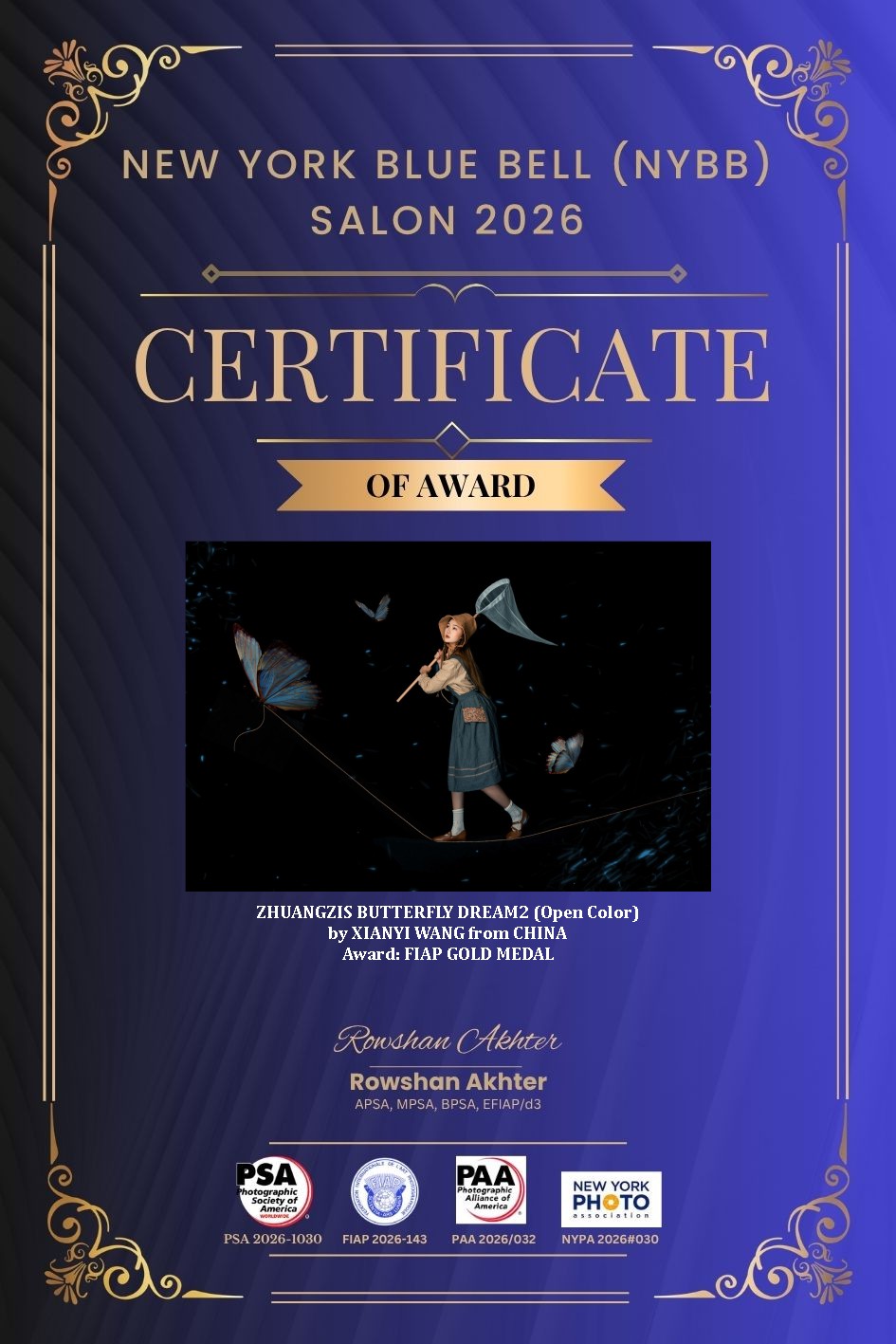
In recent years, Wang’s work has received international recognition through exhibitions, publications, and awards, including honors from FIAP, the Golden Lion Photo Circuit 2025 (PhotoVivo Gold Medal), and ONYX. These honors suggest that his visual language resonates across cultural contexts. Still, Wang remains cautious about allowing external recognition to define his practice. He sees awards as feedback, not direction. His priority is to continue refining a personal visual language that is clear, stable, and emotionally honest.
BIMC
Boston International Media Consulting
email us here
Legal Disclaimer:
EIN Presswire provides this news content "as is" without warranty of any kind. We do not accept any responsibility or liability for the accuracy, content, images, videos, licenses, completeness, legality, or reliability of the information contained in this article. If you have any complaints or copyright issues related to this article, kindly contact the author above.
