
How to Evaluate Mold Development and Custom Tooling at the Best Dust Bin Manufacturer in China
JIANGMEN, GUANGDONG, CHINA, June 25, 2026 /EINPresswire.com/ -- How much does a minor structural flaw in a product blueprint cost when scaling up to mass production? For international souring managers, wholesalers, and retail brands in the home organization sector, the answer often involves thousands of dollars in wasted materials, missed retail launch windows, and unexpected tooling modification fees. When selecting an OEM or ODM partner for waste management products, procurement professionals frequently focus on the superficial aesthetics of a sample or the initial per-unit price. However, the true viability of a long-term supply chain partner rests on capabilities that remain largely hidden from view: mold development precision, tool modification responsiveness, and engineering transparency.
In the competitive landscape of hardware and houseware manufacturing, identifying the Best Dust Bin Manufacturer in China requires looking past basic assembly lines. For B2B buyers looking to launch durable, commercially viable waste bins, the engineering infrastructure behind the product is paramount. JAUVICASA, the flagship brand of Jiangmen Hopeful Houseware Limited, serves as a practical benchmark for how a modern manufacturer should structure its custom tooling services. Established in 2015 in Jiangmen City, Guangdong Province, the company has integrated an in-house mold facility within its 16,000-square-meter production area. By examining the structural workflows of established suppliers like JAUVICASA, international buyers can establish a rigorous framework for evaluating custom tooling capabilities.
The Strategic Importance of an In-House Mold Shop
When sourcing a custom dust bin, a primary point of evaluation is whether the manufacturer operates an autonomous, in-house mold shop or relies on external third-party toolmakers. Subcontracting mold fabrication introduces substantial variables, including delayed communication, extended lead times for modifications, and accumulated markups on tooling costs.
From an operational standpoint, an onsite engineering department alters the dynamics of product development. At the Jiangmen Hopeful Houseware Limited facility, more than 100 workers support a monthly production capacity of 240,000 pieces. Central to this output is an in-house workshop dedicated exclusively to mold design, electrode fabrication, precision machining, and ongoing tool maintenance.
For a B2B buyer, this internal capability provides several logistical advantages:
Cost Elimination: Direct engineering removes the financial premiums associated with outsourced mold fabrication.
Asset Preservation: Master molds are archived, indexed, and maintained systematically within the facility, ensuring that future production runs maintain consistent dimensional accuracy.
Rapid Adaptation: If a tool requires immediate repair or subtle adjustment during production, the work happens on-site, minimizing downtime that could otherwise compromise retail fulfillment schedules.
Verifying Tooling Transparency and Milestone Deliverables
A reliable manufacturing partner must provide a clear, standardized development roadmap rather than ambiguous timelines. When assessing a potential dust bin manufacturer, buyers should demand a detailed breakdown of engineering deliverables from initial concept to final component approval.
The structural workflow utilized by JAUVICASA illustrates the necessary stages of a professional OEM/ODM engineering cycle:
1. Design for Manufacturability (DFM) Review
Before any steel is cut, engineers must conduct a thorough DFM analysis. This technical evaluation assesses critical injection molding and metal stamping parameters, including draft angles, wall thickness uniformity, and optimal parting line placement. Proper DFM engineering prevents common production defects such as short shots, sink marks, and air traps in the final dust bin components.
2. Mold Structure Confirmation
Following the DFM alignment, the manufacturer should supply comprehensive 3D mold structure drawings. Buyers must review and sign off on these technical schematics to verify gate locations, ejection mechanisms, and cooling channel layouts before tooling fabrication begins.
3. Systematic Trial and Correction (T0 to T1)
The fabrication phase transitions into systematic testing. The initial test injection (T0 sample) undergoes comprehensive dimensional and functional inspections to identify physical variances. Necessary adjustments are performed in the tool shop to generate the T1 qualified sample. This corrected sample serves as the definitive golden sample for client sign-off and sealing.
4. Mass Production Integration
Once approved, the tool is logged into the active production registry. At this stage, strict preventative maintenance protocols are established, linking the tooling asset directly to quality assurance schedules to ensure long-term performance.
Assessing Modification Flexibility and Cost Control
The true test of a manufacturer's engineering agility occurs when a product requires post-fabrication changes. Minor adjustments—such as shifting a logo placement, altering an edge radius, or adjusting wall thickness by a fraction of a millimeter—are common during the pre-production phase.
In an outsourced manufacturing model, these minor revisions often trigger significant tooling surcharges and weeks of delay. However, a supplier with direct control over its tool shop can manage these changes through modular mold architecture. By utilizing interchangeable sliders and custom inserts, adjustments can be confined to specific sections of the mold rather than requiring an entirely new tool.
This technical flexibility directly impacts development cycles. For instance, standard prototyping and sample generation can be completed within a five-to-seven working day window. Minimizing Non-Recurring Engineering (NRE) expenses allows brands to refine their product lines based on real-time market feedback without absorbing prohibitive financial penalties.
Linking Tooling Quality to Volumetric Production and Quality Assurance
A high-quality mold is only as valuable as the quality control framework governing its operation. When evaluating a dust bin production facility, buyers must verify how the manufacturer connects tool maintenance with daily quality assurance protocols.
At the JAUVICASA production facility, manufacturing processes conform to international standards, backed by certifications such as ISO9001, BSCI, FSC, and GRS. The operational lifecycle of a dust bin relies on rigorous testing at multiple check-points:
Inbound Material Inspection: Raw materials, including stainless steel sheets and plastic polymers, undergo testing to ensure compliance with RoHS and REACH environmental regulations.
In-Process Dimensional Verification: During active manufacturing cycles, components are pulled from the line at set intervals to check for structural deviation, ensuring the mold is operating within specified tolerances.
Pre-Shipment Inspections: Finished goods undergo final quality checks based on standardized Acceptable Quality Limit (AQL) parameters.
Because the factory synchronizes its tool maintenance logs with active production scheduling, the risk of machinery conflicts or unexpected tool degradation during a high-volume run is significantly reduced.
Core Product Architecture and Manufacturing Diversification
The structural integrity of a manufacturer's tooling directly influences the diversity and quality of its final product catalog. In the waste management sector, a single product category demands a wide variety of mechanical configurations, each requiring dedicated tooling expertise.
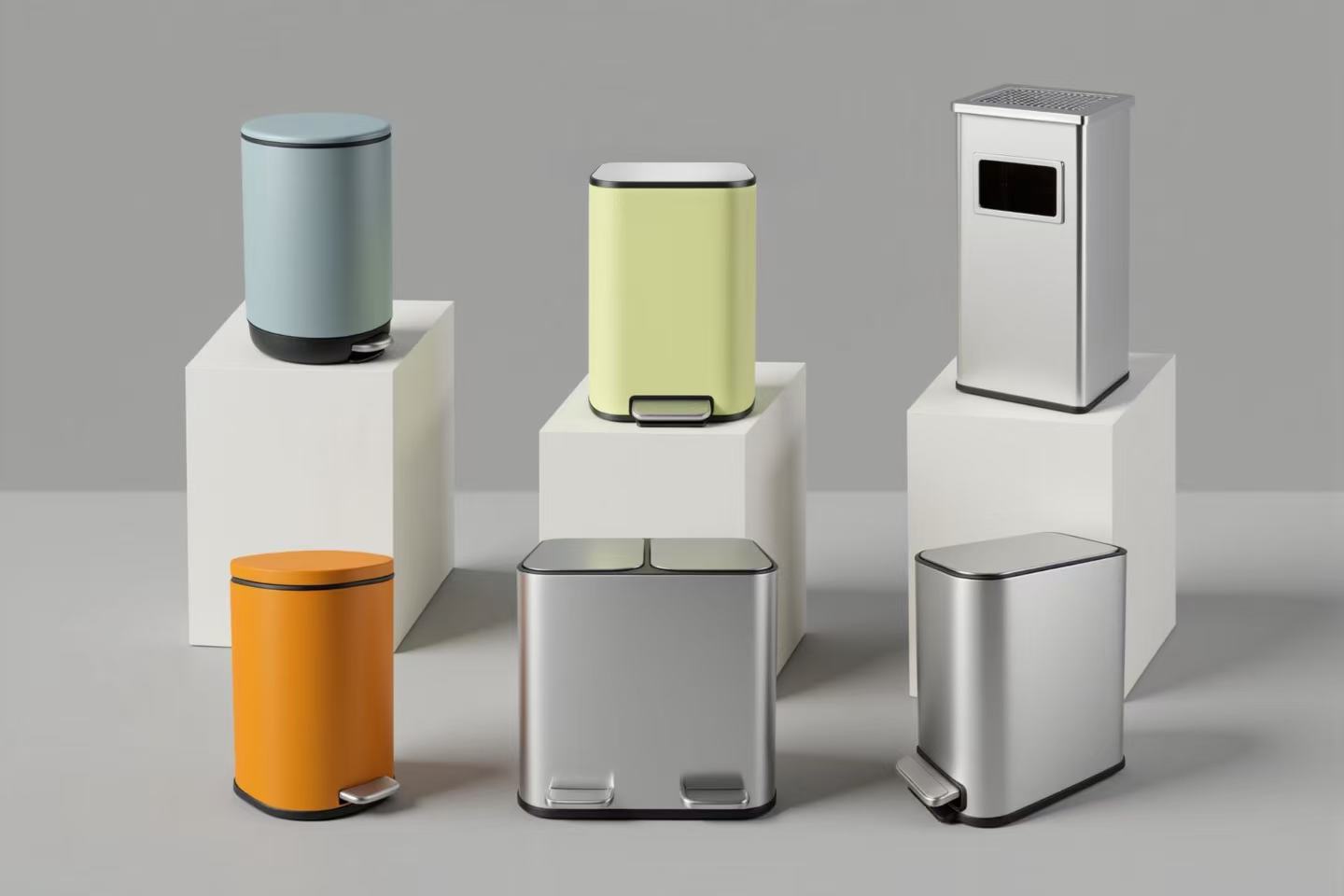
The product lines manufactured by Jiangmen Hopeful Houseware Limited reflect this technical diversity. Within their specialized trash can category, production capabilities encompass multiple mechanical architectures:
Step-On and Sensor Bins: These units require precise internal linkage molds and sensor housing components to ensure smooth lid operation and reliable longevity.
Open-Top and Recycling Solutions: These designs call for durable, large-scale tooling to produce stable outer shells and integrated dual-compartment configurations.
These custom structural solutions extend across the broader home organization portfolio, including kitchen utensil holders, dish racks, and bathroom shelving systems. Each product requires precise tooling to achieve the clean lines, reliable surface treatments, and structural durability required by international hospitality, retail, and e-commerce distribution channels.
Engineering Quality as the Foundation of Supply Chain Reliability
Ultimately, a reliable, well-engineered dust bin is the direct result of a well-executed mold. When auditing potential manufacturing partners in China, procurement teams must look beyond standard pricing sheets. True supply chain security is found by evaluating the presence of an in-house tool shop, demanding clear DFM workflows, confirming flexible mold modification policies, and verifying integrated quality control systems.
By anchoring production within a verifiable engineering framework, brands can confidently scale their product lines, reduce long-term capital risks, and maintain consistent quality across high-volume distribution runs.
For organizations seeking to evaluate their next custom product deployment or request a formal DFM review and tooling cost estimation, detailed operational specifications and technical consultation can be initiated through the official corporate portal at https://jauvicasa.com/.
In the competitive landscape of hardware and houseware manufacturing, identifying the Best Dust Bin Manufacturer in China requires looking past basic assembly lines. For B2B buyers looking to launch durable, commercially viable waste bins, the engineering infrastructure behind the product is paramount. JAUVICASA, the flagship brand of Jiangmen Hopeful Houseware Limited, serves as a practical benchmark for how a modern manufacturer should structure its custom tooling services. Established in 2015 in Jiangmen City, Guangdong Province, the company has integrated an in-house mold facility within its 16,000-square-meter production area. By examining the structural workflows of established suppliers like JAUVICASA, international buyers can establish a rigorous framework for evaluating custom tooling capabilities.
The Strategic Importance of an In-House Mold Shop
When sourcing a custom dust bin, a primary point of evaluation is whether the manufacturer operates an autonomous, in-house mold shop or relies on external third-party toolmakers. Subcontracting mold fabrication introduces substantial variables, including delayed communication, extended lead times for modifications, and accumulated markups on tooling costs.
From an operational standpoint, an onsite engineering department alters the dynamics of product development. At the Jiangmen Hopeful Houseware Limited facility, more than 100 workers support a monthly production capacity of 240,000 pieces. Central to this output is an in-house workshop dedicated exclusively to mold design, electrode fabrication, precision machining, and ongoing tool maintenance.
For a B2B buyer, this internal capability provides several logistical advantages:
Cost Elimination: Direct engineering removes the financial premiums associated with outsourced mold fabrication.
Asset Preservation: Master molds are archived, indexed, and maintained systematically within the facility, ensuring that future production runs maintain consistent dimensional accuracy.
Rapid Adaptation: If a tool requires immediate repair or subtle adjustment during production, the work happens on-site, minimizing downtime that could otherwise compromise retail fulfillment schedules.
Verifying Tooling Transparency and Milestone Deliverables
A reliable manufacturing partner must provide a clear, standardized development roadmap rather than ambiguous timelines. When assessing a potential dust bin manufacturer, buyers should demand a detailed breakdown of engineering deliverables from initial concept to final component approval.
The structural workflow utilized by JAUVICASA illustrates the necessary stages of a professional OEM/ODM engineering cycle:
1. Design for Manufacturability (DFM) Review
Before any steel is cut, engineers must conduct a thorough DFM analysis. This technical evaluation assesses critical injection molding and metal stamping parameters, including draft angles, wall thickness uniformity, and optimal parting line placement. Proper DFM engineering prevents common production defects such as short shots, sink marks, and air traps in the final dust bin components.
2. Mold Structure Confirmation
Following the DFM alignment, the manufacturer should supply comprehensive 3D mold structure drawings. Buyers must review and sign off on these technical schematics to verify gate locations, ejection mechanisms, and cooling channel layouts before tooling fabrication begins.
3. Systematic Trial and Correction (T0 to T1)
The fabrication phase transitions into systematic testing. The initial test injection (T0 sample) undergoes comprehensive dimensional and functional inspections to identify physical variances. Necessary adjustments are performed in the tool shop to generate the T1 qualified sample. This corrected sample serves as the definitive golden sample for client sign-off and sealing.
4. Mass Production Integration
Once approved, the tool is logged into the active production registry. At this stage, strict preventative maintenance protocols are established, linking the tooling asset directly to quality assurance schedules to ensure long-term performance.
Assessing Modification Flexibility and Cost Control
The true test of a manufacturer's engineering agility occurs when a product requires post-fabrication changes. Minor adjustments—such as shifting a logo placement, altering an edge radius, or adjusting wall thickness by a fraction of a millimeter—are common during the pre-production phase.
In an outsourced manufacturing model, these minor revisions often trigger significant tooling surcharges and weeks of delay. However, a supplier with direct control over its tool shop can manage these changes through modular mold architecture. By utilizing interchangeable sliders and custom inserts, adjustments can be confined to specific sections of the mold rather than requiring an entirely new tool.
This technical flexibility directly impacts development cycles. For instance, standard prototyping and sample generation can be completed within a five-to-seven working day window. Minimizing Non-Recurring Engineering (NRE) expenses allows brands to refine their product lines based on real-time market feedback without absorbing prohibitive financial penalties.
Linking Tooling Quality to Volumetric Production and Quality Assurance
A high-quality mold is only as valuable as the quality control framework governing its operation. When evaluating a dust bin production facility, buyers must verify how the manufacturer connects tool maintenance with daily quality assurance protocols.
At the JAUVICASA production facility, manufacturing processes conform to international standards, backed by certifications such as ISO9001, BSCI, FSC, and GRS. The operational lifecycle of a dust bin relies on rigorous testing at multiple check-points:
Inbound Material Inspection: Raw materials, including stainless steel sheets and plastic polymers, undergo testing to ensure compliance with RoHS and REACH environmental regulations.
In-Process Dimensional Verification: During active manufacturing cycles, components are pulled from the line at set intervals to check for structural deviation, ensuring the mold is operating within specified tolerances.
Pre-Shipment Inspections: Finished goods undergo final quality checks based on standardized Acceptable Quality Limit (AQL) parameters.
Because the factory synchronizes its tool maintenance logs with active production scheduling, the risk of machinery conflicts or unexpected tool degradation during a high-volume run is significantly reduced.
Core Product Architecture and Manufacturing Diversification
The structural integrity of a manufacturer's tooling directly influences the diversity and quality of its final product catalog. In the waste management sector, a single product category demands a wide variety of mechanical configurations, each requiring dedicated tooling expertise.
The product lines manufactured by Jiangmen Hopeful Houseware Limited reflect this technical diversity. Within their specialized trash can category, production capabilities encompass multiple mechanical architectures:
Step-On and Sensor Bins: These units require precise internal linkage molds and sensor housing components to ensure smooth lid operation and reliable longevity.
Open-Top and Recycling Solutions: These designs call for durable, large-scale tooling to produce stable outer shells and integrated dual-compartment configurations.
These custom structural solutions extend across the broader home organization portfolio, including kitchen utensil holders, dish racks, and bathroom shelving systems. Each product requires precise tooling to achieve the clean lines, reliable surface treatments, and structural durability required by international hospitality, retail, and e-commerce distribution channels.
Engineering Quality as the Foundation of Supply Chain Reliability
Ultimately, a reliable, well-engineered dust bin is the direct result of a well-executed mold. When auditing potential manufacturing partners in China, procurement teams must look beyond standard pricing sheets. True supply chain security is found by evaluating the presence of an in-house tool shop, demanding clear DFM workflows, confirming flexible mold modification policies, and verifying integrated quality control systems.
By anchoring production within a verifiable engineering framework, brands can confidently scale their product lines, reduce long-term capital risks, and maintain consistent quality across high-volume distribution runs.
For organizations seeking to evaluate their next custom product deployment or request a formal DFM review and tooling cost estimation, detailed operational specifications and technical consultation can be initiated through the official corporate portal at https://jauvicasa.com/.
JIANGMEN HOPEFUL HOUSEWARE LIMITED
+86 7503118683
support@jmhopeful.com
Visit us on social media:
LinkedIn
Instagram
Facebook
YouTube
Legal Disclaimer:
EIN Presswire provides this news content "as is" without warranty of any kind. We do not accept any responsibility or liability for the accuracy, content, images, videos, licenses, completeness, legality, or reliability of the information contained in this article. If you have any complaints or copyright issues related to this article, kindly contact the author above.

