Doubling the Solar Input With 200W×2 Dual-Panel Kits: What It Means for True Long-Term Off-Grid Independence
WILMINGTON, DE, UNITED STATES, September 1, 2026 /EINPresswire.com/ -- Modern off-grid living demands a sophisticated approach to energy management. As enthusiasts push further into remote environments, the gap between power consumption and renewable harvesting capacity often determines the success of a trip. Achieving true autonomy requires more than just storage; it necessitates a robust energy intake strategy. When travelers rely on extended stays in wilderness areas, the ability to replenish stored energy rapidly becomes a critical operational requirement rather than a luxury.
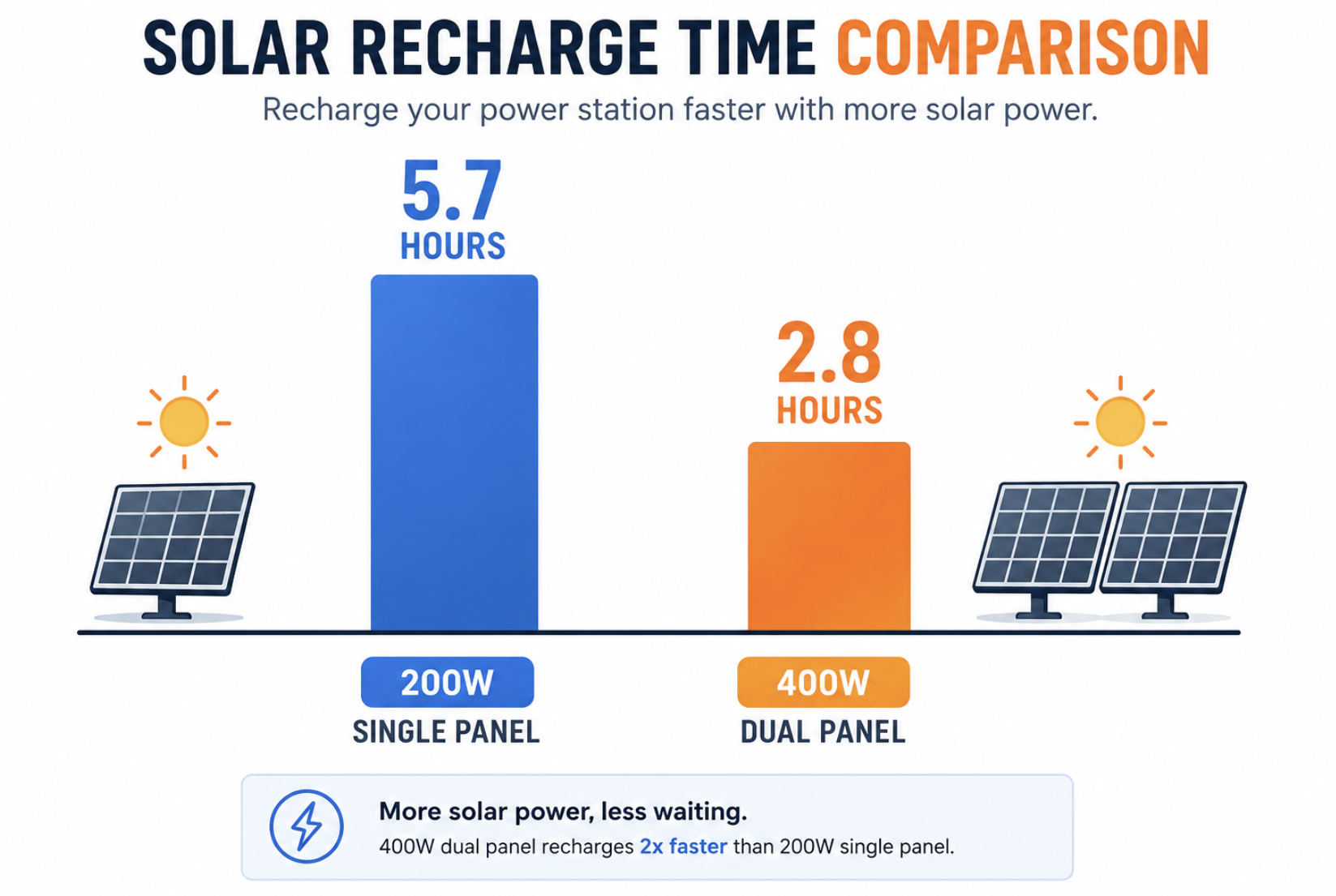
Effective energy independence centers on the efficiency of solar harvesting. Transitioning from single-panel setups to Dual-Panel Generator Kits represents a strategic upgrade for serious mobile power users. A standard 200W solar array typically requires 5.7 hours of ideal sunlight to replenish a 1024Wh storage core. By contrast, a 400W dual-panel configuration slashes this window to approximately 2.8 hours. This efficiency gain provides a clear answer for those questioning if the additional investment yields tangible utility. Careful analysis shows that doubling the input significantly enhances operational continuity in regions with limited peak sun hours.
The Energy ROI Calculus: Evaluating the 200W×2 Solar Leap vs. The Single 200W Baseline
Financial decisions regarding off-grid equipment often center on the cost of downtime versus the price of hardware upgrades. While a dual-panel setup requires a higher initial investment than a single-panel system, this cost prompts a logical question: does a 50% reduction in recharge duration justify the premium? The answer depends on individual consumption habits and the duration of stay. For casual weekend campers, the baseline 200W setup often suffices. However, for professionals maintaining remote workstations or individuals relying on medical equipment, the reduced recharge cycle proves invaluable.
Speeding up the recharge process directly influences the "boondocking horizon," or the total time one can remain disconnected from the grid. Faster intake allows the station to recover during brief clear-sky intervals between storm clouds. Furthermore, the system architecture supports an upper structural limit of 800W, meaning users possess the flexibility to add more panels for an ultra-rapid 1.5-hour recharge cycle in the future. This scalability makes the current dual-panel investment a foundation for long-term modular growth rather than a static purchase.
Temporal Economics: How Panel Density Reshapes Off-Grid Workflow
Time acts as the most precious currency in off-grid logistics. A dual-panel input rate minimizes the period during which a power station must remain stationary for charging. This flexibility allows for better management of outdoor setups, where the user may need to move locations frequently. With faster solar harvesting, energy replenishment no longer dictates the entirety of the daily schedule. Users gain hours of extra daylight for exploration or remote tasks, as the station effectively "keeps up" with daily household power demands.
When clouds obstruct the sun, efficiency becomes paramount. A 200W×2 dual-panel input system captures more energy even in sub-optimal conditions, providing a safety margin that 200W systems lack. This reliable intake ensures that essential loads—such as networking gear, portable refrigeration, or safety sensors—remain powered without manual intervention. By reshaping the energy workflow, travelers spend less time managing battery percentages and more time pursuing the activities that initially drew them into the wilderness.
Structural Integrity and Solar Array Interfacing
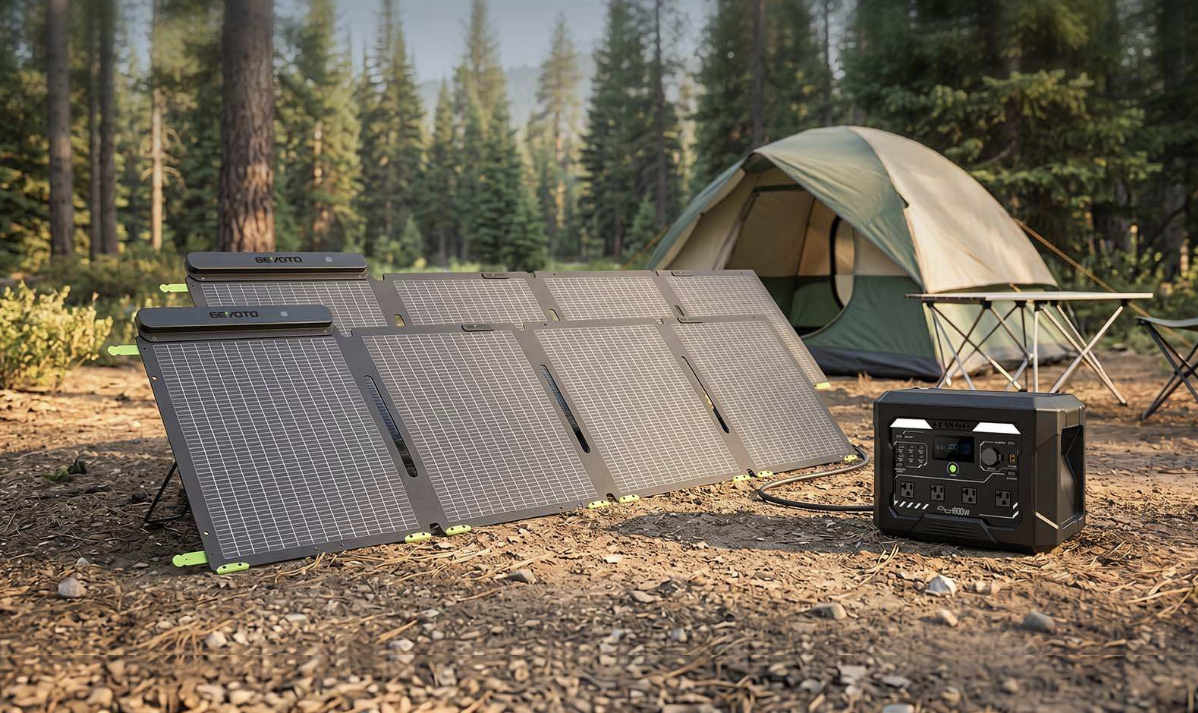
Scaling solar input requires strict adherence to technical parameters to maintain hardware longevity. Synchronizing dual S200 panels involves daisy-chaining the arrays to achieve a unified voltage output that the MPPT controller can process. This integration relies on the high-grade MC4 and DC connector interfaces, which handle higher wattage throughput more reliably than standard consumer USB cables. Correct cable management prevents thermal losses and ensures that every watt captured reaches the battery core efficiently. Each S200 panel also uses hand-selected cells rated at 26% conversion efficiency, so the gain from adding a second panel comes from genuinely higher-yield hardware rather than just doubled surface area. Aligning two panels correctly matters as much as connecting them: the built-in Y-shaped kickstand and integrated sun dial on each S200 let users lock in the optimal sun angle in seconds, which keeps both arrays contributing evenly to the combined 400W input instead of one panel underperforming due to a poor angle.
Maintenance protocols for these high-performance panels are straightforward yet essential. The ETFE laminate surface provides excellent light transmission and durability against environmental wear. However, operators must remain vigilant regarding the hardware limits of the assembly. The waterproof IP68 rating applies exclusively to the panel’s laminated surface; the output terminals, connector cables, and main junction boxes are strictly excluded from this waterproof protection zone. Keeping these connection points dry remains the single most important rule for preventing short circuits during high-wattage harvesting.
The Engineering Perspective on Thermal and Load Management
Rapid solar harvesting introduces complex thermal dynamics that require precise internal regulation. As the N1000 system processes a 400W inflow, the integrated thermal management system adjusts cooling flows to prevent heat accumulation within the housing. GEYOTO (GEYOTO Technology Limited) prioritizes this internal balance to protect the health of the 1024Wh lithium-based storage core. Effective heat dissipation preserves the cycle life of the batteries, ensuring they maintain capacity over many years of field deployment. This matters because the N1000 uses EV-grade LiFePO4 cells rated for 4000+ charge cycles and a 10-year service life — numbers that only hold up if the battery is kept within safe thermal limits during high-wattage charging events like a 400W dual-panel input.
Technical precision also extends to the monitoring of input currents. When scaling input toward the system's 800W ceiling, the internal MPPT controller regulates the voltage to prevent overloading the circuitry. Users should always check the input metrics of their specific panels before finalizing a multi-panel installation. This proactive monitoring ensures the electrical system stays within the engineering limits of the controller, avoiding unnecessary safety shutdowns. By maintaining stable input curves, GEYOTO ensures that the hardware performs reliably under the demanding conditions of remote field work. That same engineering focus on high-current handling shows up on the output side as well: a dedicated XT60 terminal delivers 12.6V at 30A, giving the N1000 one of the strongest built-in vehicle jump-start capabilities in its class — a separate but equally valuable form of field insurance from the 200W×2 solar array that keeps the battery topped up.
Optimized Domestic Fulfillment for Serious Energy Consumers
Reliability extends beyond the physical hardware to the logistical framework supporting the end user. GEYOTO Technology Limited understands that enthusiasts need their equipment delivered promptly and in perfect condition to meet travel deadlines. To eliminate the friction common in international shipping, the company utilizes a dedicated distribution model. All orders benefit from rapid, US-only free shipping directly from domestic fulfillment hubs. This localized approach bypasses the complexities of border delays, ensuring that vital power equipment reaches the user when it matters most.
Post-purchase support rounds out the professional experience provided by GEYOTO. The N1000 power station carries a three-year standard warranty, extendable to five years (3+2) with online registration. The bundled S200 panels each carry a separate one-year standard warranty, extendable to three years (1+2) upon registration. This dual-track coverage reflects the different engineering lifespans of the battery core and the solar hardware. This comprehensive support structure guarantees that consumers receive ongoing technical guidance as their energy needs evolve. By emphasizing data-driven performance and reliable domestic logistics, the brand provides a stable partner for those committed to off-grid independence.
For comprehensive product catalogs, technical documentation, or inquiries regarding direct procurement, please visit the official corporate website at https://www.geyoto.com/.
Effective energy independence centers on the efficiency of solar harvesting. Transitioning from single-panel setups to Dual-Panel Generator Kits represents a strategic upgrade for serious mobile power users. A standard 200W solar array typically requires 5.7 hours of ideal sunlight to replenish a 1024Wh storage core. By contrast, a 400W dual-panel configuration slashes this window to approximately 2.8 hours. This efficiency gain provides a clear answer for those questioning if the additional investment yields tangible utility. Careful analysis shows that doubling the input significantly enhances operational continuity in regions with limited peak sun hours.
The Energy ROI Calculus: Evaluating the 200W×2 Solar Leap vs. The Single 200W Baseline
Financial decisions regarding off-grid equipment often center on the cost of downtime versus the price of hardware upgrades. While a dual-panel setup requires a higher initial investment than a single-panel system, this cost prompts a logical question: does a 50% reduction in recharge duration justify the premium? The answer depends on individual consumption habits and the duration of stay. For casual weekend campers, the baseline 200W setup often suffices. However, for professionals maintaining remote workstations or individuals relying on medical equipment, the reduced recharge cycle proves invaluable.
Speeding up the recharge process directly influences the "boondocking horizon," or the total time one can remain disconnected from the grid. Faster intake allows the station to recover during brief clear-sky intervals between storm clouds. Furthermore, the system architecture supports an upper structural limit of 800W, meaning users possess the flexibility to add more panels for an ultra-rapid 1.5-hour recharge cycle in the future. This scalability makes the current dual-panel investment a foundation for long-term modular growth rather than a static purchase.
Temporal Economics: How Panel Density Reshapes Off-Grid Workflow
Time acts as the most precious currency in off-grid logistics. A dual-panel input rate minimizes the period during which a power station must remain stationary for charging. This flexibility allows for better management of outdoor setups, where the user may need to move locations frequently. With faster solar harvesting, energy replenishment no longer dictates the entirety of the daily schedule. Users gain hours of extra daylight for exploration or remote tasks, as the station effectively "keeps up" with daily household power demands.
When clouds obstruct the sun, efficiency becomes paramount. A 200W×2 dual-panel input system captures more energy even in sub-optimal conditions, providing a safety margin that 200W systems lack. This reliable intake ensures that essential loads—such as networking gear, portable refrigeration, or safety sensors—remain powered without manual intervention. By reshaping the energy workflow, travelers spend less time managing battery percentages and more time pursuing the activities that initially drew them into the wilderness.
Structural Integrity and Solar Array Interfacing
Scaling solar input requires strict adherence to technical parameters to maintain hardware longevity. Synchronizing dual S200 panels involves daisy-chaining the arrays to achieve a unified voltage output that the MPPT controller can process. This integration relies on the high-grade MC4 and DC connector interfaces, which handle higher wattage throughput more reliably than standard consumer USB cables. Correct cable management prevents thermal losses and ensures that every watt captured reaches the battery core efficiently. Each S200 panel also uses hand-selected cells rated at 26% conversion efficiency, so the gain from adding a second panel comes from genuinely higher-yield hardware rather than just doubled surface area. Aligning two panels correctly matters as much as connecting them: the built-in Y-shaped kickstand and integrated sun dial on each S200 let users lock in the optimal sun angle in seconds, which keeps both arrays contributing evenly to the combined 400W input instead of one panel underperforming due to a poor angle.
Maintenance protocols for these high-performance panels are straightforward yet essential. The ETFE laminate surface provides excellent light transmission and durability against environmental wear. However, operators must remain vigilant regarding the hardware limits of the assembly. The waterproof IP68 rating applies exclusively to the panel’s laminated surface; the output terminals, connector cables, and main junction boxes are strictly excluded from this waterproof protection zone. Keeping these connection points dry remains the single most important rule for preventing short circuits during high-wattage harvesting.
The Engineering Perspective on Thermal and Load Management
Rapid solar harvesting introduces complex thermal dynamics that require precise internal regulation. As the N1000 system processes a 400W inflow, the integrated thermal management system adjusts cooling flows to prevent heat accumulation within the housing. GEYOTO (GEYOTO Technology Limited) prioritizes this internal balance to protect the health of the 1024Wh lithium-based storage core. Effective heat dissipation preserves the cycle life of the batteries, ensuring they maintain capacity over many years of field deployment. This matters because the N1000 uses EV-grade LiFePO4 cells rated for 4000+ charge cycles and a 10-year service life — numbers that only hold up if the battery is kept within safe thermal limits during high-wattage charging events like a 400W dual-panel input.
Technical precision also extends to the monitoring of input currents. When scaling input toward the system's 800W ceiling, the internal MPPT controller regulates the voltage to prevent overloading the circuitry. Users should always check the input metrics of their specific panels before finalizing a multi-panel installation. This proactive monitoring ensures the electrical system stays within the engineering limits of the controller, avoiding unnecessary safety shutdowns. By maintaining stable input curves, GEYOTO ensures that the hardware performs reliably under the demanding conditions of remote field work. That same engineering focus on high-current handling shows up on the output side as well: a dedicated XT60 terminal delivers 12.6V at 30A, giving the N1000 one of the strongest built-in vehicle jump-start capabilities in its class — a separate but equally valuable form of field insurance from the 200W×2 solar array that keeps the battery topped up.
Optimized Domestic Fulfillment for Serious Energy Consumers
Reliability extends beyond the physical hardware to the logistical framework supporting the end user. GEYOTO Technology Limited understands that enthusiasts need their equipment delivered promptly and in perfect condition to meet travel deadlines. To eliminate the friction common in international shipping, the company utilizes a dedicated distribution model. All orders benefit from rapid, US-only free shipping directly from domestic fulfillment hubs. This localized approach bypasses the complexities of border delays, ensuring that vital power equipment reaches the user when it matters most.
Post-purchase support rounds out the professional experience provided by GEYOTO. The N1000 power station carries a three-year standard warranty, extendable to five years (3+2) with online registration. The bundled S200 panels each carry a separate one-year standard warranty, extendable to three years (1+2) upon registration. This dual-track coverage reflects the different engineering lifespans of the battery core and the solar hardware. This comprehensive support structure guarantees that consumers receive ongoing technical guidance as their energy needs evolve. By emphasizing data-driven performance and reliable domestic logistics, the brand provides a stable partner for those committed to off-grid independence.
For comprehensive product catalogs, technical documentation, or inquiries regarding direct procurement, please visit the official corporate website at https://www.geyoto.com/.
GEYOTO Technology Limited
+1 213-292-9187
email us here
Legal Disclaimer:
EIN Presswire provides this news content "as is" without warranty of any kind. We do not accept any responsibility or liability for the accuracy, content, images, videos, licenses, completeness, legality, or reliability of the information contained in this article. If you have any complaints or copyright issues related to this article, kindly contact the author above.