

New Review Explains Why Biosensor Sensitivity Alone Is Not Enough
News originally published by
EIN Presswire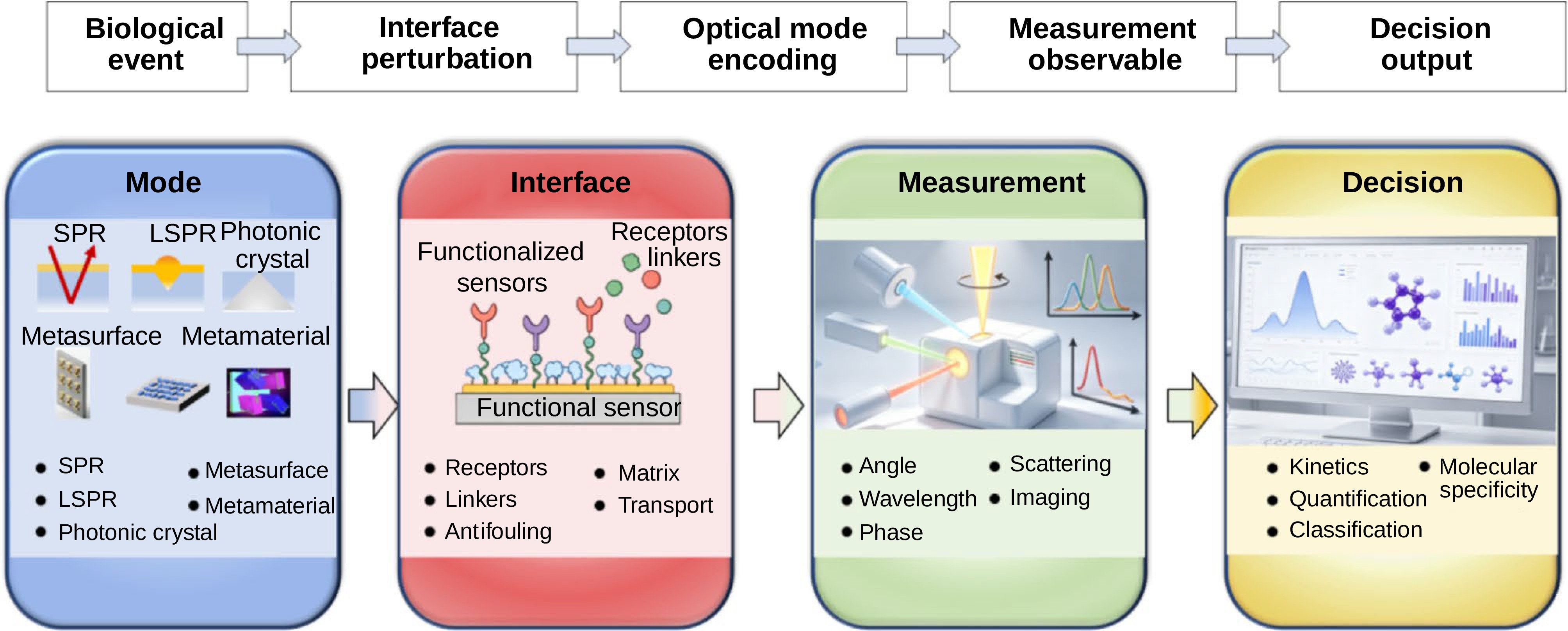
A Mode-Interface-Measurement-Decision framework for nanophotonic biosensing.
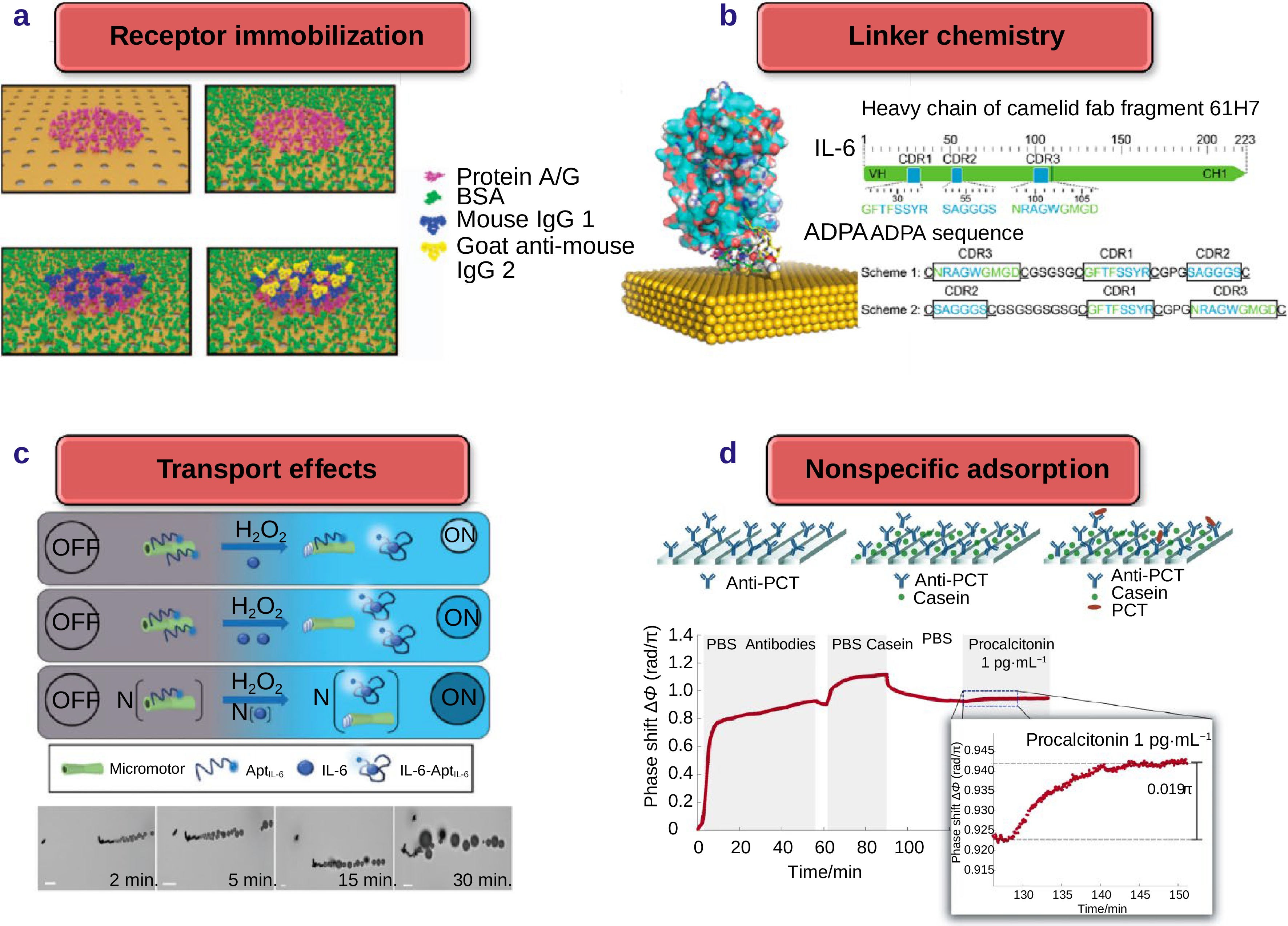
Interface layer.
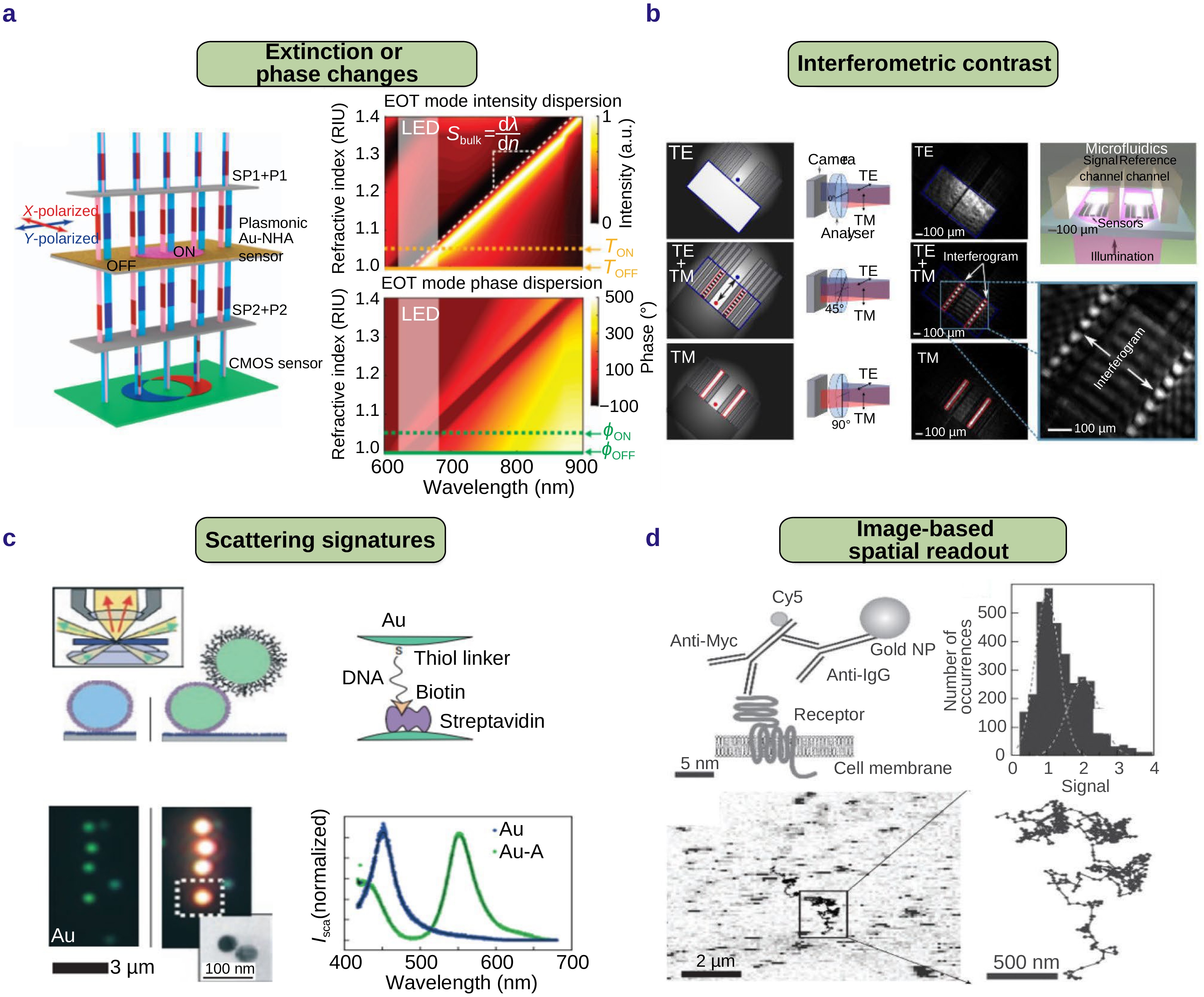
Measurement layer.
SHANNON, CLARE, IRELAND, November 9, 2026 /EINPresswire.com/ -- Announcing a new publication from Opto-Electronic Advances; DOI 10.29026/oea.2026.260126.
A biosensor can detect an small signal and still struggle to tell whether it matters. A review in Opto-Electronic Advances argues that the next leap in optical biosensing will depend on turning molecular signals into reliable answers, rather than improving sensitivity alone.
The distinction matters for technologies intended to identify biological targets in complex samples. Unwanted molecules can stick to sensing surfaces, targets can miss the regions where light is strongest, and background interference can obscure a signal. An impressive detection limit does not resolve these problems by itself.
Mengyao Li and Jiaming Lyu, of Beijing Information Science & Technology University, propose a framework for tackling this gap. Called Mode, Interface, Measurement and Decision, or MIMD, it treats a biosensor as an information pathway, connecting molecular interactions to the conclusions drawn from them.
Nanophotonic biosensors use structures to concentrate light and make weak molecular interactions detectable. The review explains why their performance depends on how well four elements work together: where light meets the target, how the surface captures it, how the resulting signal is measured, and what question that signal can answer.
This perspective shifts the design challenge. A stronger optical hotspot helps only when molecules can reach it. A surface that captures more material helps only when it can distinguish the target from unwanted background. A measurable change becomes useful when it supports a clear interpretation.
The review brings this argument across technologies ranging from surface plasmon resonance and photonic crystals to metasurfaces and surface-enhanced Raman spectroscopy. Its central principle is information fidelity: preserving biologically relevant information from the molecular interaction to the final analytical answer.
For future devices, the article proposes combining dependable optical detection with complementary measurements that reveal more about molecular identity and behavior. Raman spectroscopy, for example, can provide chemical fingerprints, adding detail beyond the presence of an optical change.
The proposed approach also gives surface chemistry, fluid handling, signal referencing and manufacturing consistency a central role. These elements influence whether a sensor can deliver repeatable results outside ideal conditions and whether optical designs can become practical sensing systems.
For developers, the framework offers a way to ask a useful question at the outset: what answer must this sensor deliver, and what could compromise it along the way? The resulting roadmap places specificity, robustness and meaningful interpretation alongside sensitivity, pointing toward biosensors designed around the quality of their answers as well as their signals.
Keywords: nanophotonic biosensing, plasmonics, metasurfaces, metamaterials, SERS
# # # # # #
Opto-Electronic Advances (OEA) is a high-impact, open access, peer reviewed SCI journal with an impact factor of 22.4 (Journal Citation Reports 2024). OEA has been indexed in SCI, EI, DOAJ, Scopus, CA and ICI databases, and expanded its Editorial Board to 41 members from 17 countries.
# # # # # #
More information: http://www.oejournal.org/oea
Editorial Board: http://www.oejournal.org/oea/editorialboard/list
All issues available in the online archive (http://www.oejournal.org/oea/archive).
Submissions to OEA may be made using ScholarOne (https://mc03.manuscriptcentral.com/oea).
ISSN: 2096-4579
CN: 51-1781/TN
Contact Us: oea@ioe.ac.cn
Twitter: @OptoElectronAdv (https://twitter.com/OptoElectronAdv?lang=en)
WeChat: OE_Journal
# # # # # #
Li MY, Lyu JM. From device metrics to information fidelity: reframing nanophotonic biosensing through mode-interface-measurement-decision. Opto-Electronic Advances 9, 260126 (2026). DOI: 10.29026/oea.2026.260126
Opto-Electronic Advances Editorial Office
Opto-Electronic Advances
oea@ioe.ac.cn
Legal Disclaimer:
EIN Presswire provides this news content "as is" without warranty of any kind. We do not accept any responsibility or liability for the accuracy, content, images, videos, licenses, completeness, legality, or reliability of the information contained in this article. If you have any complaints or copyright issues related to this article, kindly contact the author above.
